
The challenge
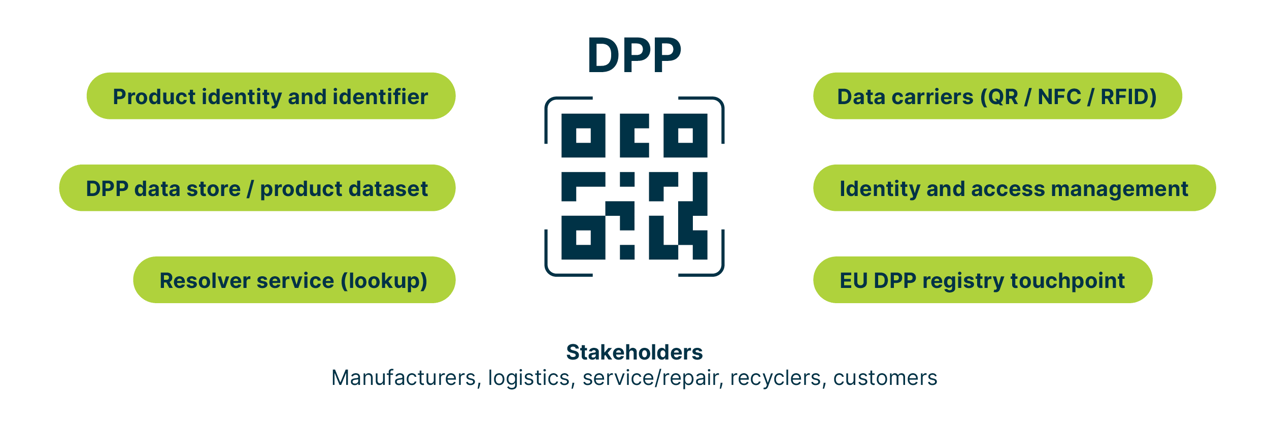
The Digital Product Passport is more than a label.
It is a new single source of truth for product data.
From 2026/27 onward, materials and goods sold in the EU, like steel, chemicals, batteries, and various construction items, must carry a Digital Product Passport (DPP). The passport must be discoverable, trustworthy, and usable by many parties, such as customers, regulators, suppliers, repairers, and recyclers.
What you need to keep in mind:
-
A QR code alone is not enough. The data must be standardized and interoperable across companies.
-
Different stakeholders need different data on the same product.
-
Product data is stored and processed in many systems and keeps expanding over time.
-
Regulations are clear on the goal, but key details are still evolving.
The risk:
Treating DPP as a one-off IT task leads to fragile pilots and expensive rework.
Are your goods and products affected by the upcoming regulations?
.png?width=1273&height=297&name=MUGM_dpp_infographic_1_en(1).png)