The challenge
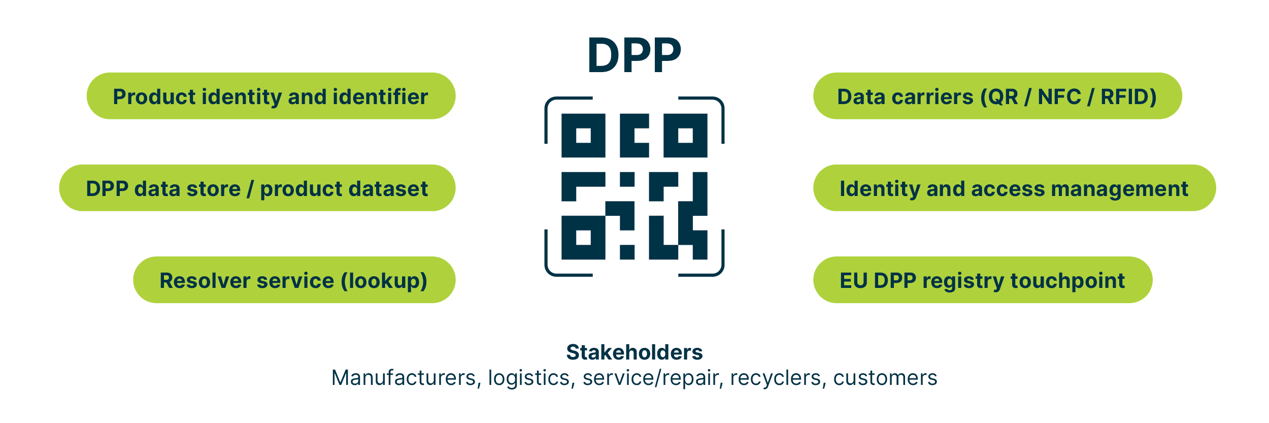
The Digital Product Passport is more than a label.
It requires reliable product data and operational processes.
Digital Product Passports are being introduced progressively across industries such as batteries, construction, textiles, steel and other product categories. The passport must be discoverable, trustworthy, and usable by customers, regulators, suppliers, repairers and recyclers. However, the required information is often distributed across internal systems, documents and supply chain partners.
What you need to keep in mind:
-
A QR code alone is not enough. The underlying data must be structured, standardized and interoperable.
-
Different stakeholders require different information and access rights.
-
Product data is distributed across ERP, PLM, PIM, sustainability, quality and supplier systems.
-
Supplier information may be incomplete, inconsistent or difficult to validate.
- Product passports must be maintained as products, data and requirements change.
- Regulatory requirements differ by product category and continue to evolve.
The risk:
Treating DPP as a one-off IT task creates fragile pilots, new data silos and expensive rework.
Are your goods and products affected by the upcoming regulations?