
<img height="1" width="1" style="display:none" src="https://www.facebook.com/tr?id=2171572209666742&amp;ev=PageView&amp;noscript=1">
*Decorative image*
Cybersecurity solution icon

Integrating the Swiss e-ID and swiyu API

Adnovum supports authorities and organizations in integrating the Swiss e-ID and swiyu trust infrastructure. From strategy to operations, ready for go-live.

Turning ideas into real-life solutions


The Swiss e-ID and swiyu trust infrastructure are opening the door to new digital services based on verifiable data. However, many authorities and organizations are unsure about which use cases make sense, how to achieve integration, and what operational considerations need to be taken into account.

Adnovum has practical experience with the swiyu trust infrastructure, both for Swiss and cross-border use cases. 

From identifying use cases and conducting pilot projects to deploying production-ready platforms - Adnovum helps you design, implement, and operate secure and compliant e-ID solutions.

Start now

Why act now?

The Swiss e-ID will become a reality in 2027. Early adopters reap first-mover advantages in digital onboarding, compliance, and building digital trust. 

 Three phases, one goal,
a productive system
 

We follow a structured, low-risk approach: use case workshops, prioritization, pilot projects, and gradual preparation for productive use.
decorative image

Consult – Map strategy to value

We identify use cases, assess business value, give regulatory and architectural guidance, and define your roadmap for the Swiss e-ID and trustworthy credentials.

decorative image

Build – Turn strategy into solutions

With the help of swiyu components and products of our partners, we provide flexible and customizable end-to-end solutions that integrate into any environment.

Man and woman watching on a tablet screen

Operate – Keep it running, keep it optimized

We ensure a secure and compliant operation of issuer and verifier infrastructures, including monitoring, lifecycle management, updates, and support – on-premises or fully managed as SaaS.

What is your use case?

We will identify your specific e-ID use cases in a structured workshop that results in a clear roadmap. 

Facts about the Swiss e-ID

decorative image

Our structured approach 

  • Use case workshops and prioritization
  • Business and regulatory assessments
  • Pilot implementations based on the Swiss e-ID and the swiyu infrastructure
  • Architectures ready for production
  • Integration into IAM tools and business applications
  • Operation of on-premises and SaaS solutions
Start now
decorative image

What you can expect 

  • Clear basis for decision-making regarding actionable e-ID use cases
  • Lower regulatory and technical implementation risk
  • Structured validation with predictable results
  • Faster transition to operational use
  • Greater confidence in digital, trust-based solutions


Early adopters reap first-mover advantages. Get started before anyone else does. 

Start now

The essentials at a glance

Our experts have been involved with the Swiss e-ID and the swiyu trust infrastructure from the very beginning. Start here!

Frequently asked questions

When will the Swiss e-ID become available?

The Swiss e-ID will become available in 2027, after the Swiss citizens approved the e-ID Act in a popular vote in September 2025. As of 2027, Swiss residents can apply for their free e-ID through the official swiyu wallet app. Organizations that want to verify or issue the credentials must enroll in the swiyu trust registry.

What is swiyu and what about the Swiss e-ID?

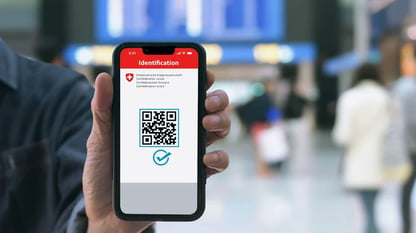
swiyu is the name of both the official Swiss trust infrastructure and the wallet app provided by the federal government. The latter issues the e-ID that is then stored in the swiyu wallet on the holder's smartphone – there is no centralized database that maintains identity information. The swiyu trust infrastructure uses open standards such as OpenID4VC (OIDC4VCI / OIDC4VP) and SD-JWT for verifiable credentials, as well as did:webvh for decentralized identifiers. It is designed for interoperability with the EU's eIDAS 2.0 framework.

What is the e-ID Act?

«e-ID Act» is the official abbreviation of the «Federal Act on Electronic Identification Services». It forms the legal basis for the Swiss e-ID and the swiyu trust infrastructure. The e-ID Act took effect following the public vote in September 2025. It allows both the public and the private sector to issue, hold, and verify digital credentials.

How can organizations integrate the Swiss e-ID?

Organizations must first enroll as verifiers in the swiyu trust registry. Integration is done via the swiyu verifier API, which allows applications to request and verify specific attributes from the swiyu wallet of a user, e.g., age, identity, or address. Adnovum provides end-to-end integration services for the e-ID: use case evaluation, verifier onboarding, API integration, and production. The swiyu public beta environment has been available for integration and testing since March 2025.

Which industries benefit the most from the integration of the Swiss e-ID?

Banks and financial service providers benefit from automated KYC and digital account opening. Insurance companies eliminate paper-based application processes and media discontinuities. Swiss cantons and municipalities can offer a verified citizen login and digital government services. At events, it is possible to conduct immediate, privacy-friendly age verification checks at the entrance. Transportation and logistics providers verify driver credentials digitally. All use cases benefit from the same core feature: cryptographically verified identities with selective disclosure. The verifier can securely determine an identity while receiving only the attributes it needs.

What does «selective disclosure» mean in the context of the Swiss e-ID?

«Selective disclosure» means that when a person presents their e-ID, they do not share all of their data, but only the specific attributes required for a particular interaction. E.g., an age check at an event venue returns only: «Older than 18: yes» – without revealing a name, date of birth, or other data. This is a core privacy-by-design principle of the e-ID Act and the swiyu infrastructure, implemented via SD-JWT (Selective Disclosure JSON Web Token).

Is the Swis e-ID compatible with the EU Digital Identity Wallet and eIDAS 2.0?

Technically, yes. The Swiss e-ID and the swiyu trust infrastructure are designed to be interoperable with the EU eIDAS 2.0 framework and the EU Digital Identity Wallet (EUDI Wallet). Both use overlapping open standards (OpenID4VC, SD-JWT). However, mutual contractual recognition is still lacking. Nevertheless, there are ways to implement cross-border use cases with the trust infrastructure even now.

How long does an e-ID integration project with Adnovum take?

A typical e-ID integration project with Adnovum begins with a 2–4-week use case workshop and a regulatory assessment. This results in a concrete roadmap for implementation. Pilot implementations using the swiyu public beta environment can be completed within 6–12 weeks. The time required for production-ready integrations varies depending on complexity.

axel_schild

Let's talk about your use case.

Free initial consultation with our digital identity experts, without any obligation.