
<img height="1" width="1" style="display:none" src="https://www.facebook.com/tr?id=2171572209666742&amp;ev=PageView&amp;noscript=1">
unicef_image_1

Digital opportunities for all

A web platform that uses Connectivity Credits as an incentive for providing internet access to public institutions worldwide.

The starting point

UNICEF envisions giving real digital opportunities to people who lack access to the internet and digital resources. As part of the Giga initiative and together with Adnovum, the concept of Connectivity Credits was quickly implemented as a minimum viable product (MVP) to be tested as a pilot with local internet service providers (ISPs) in selected countries. The goal is to create incentives, especially for smaller ISPs, to quickly and unbureaucratically provide internet coverage to financially unprofitable or hard-to-reach regions, as well as schools and hospitals in crime-affected areas, ensuring access to the internet for everyone.

https://25013463.fs1.hubspotusercontent-eu1.net/hubfs/25013463/FILES/03_Clients/UNICEF/unicef_portrait.jpg

«Collaborating with the Adnovum team felt like clicking into a well-oiled machine, where everything ran very smoothly and got up to full speed very quickly.»

Harry Wilson

Product Lead, UNICEF

unicef_image_2

The solution

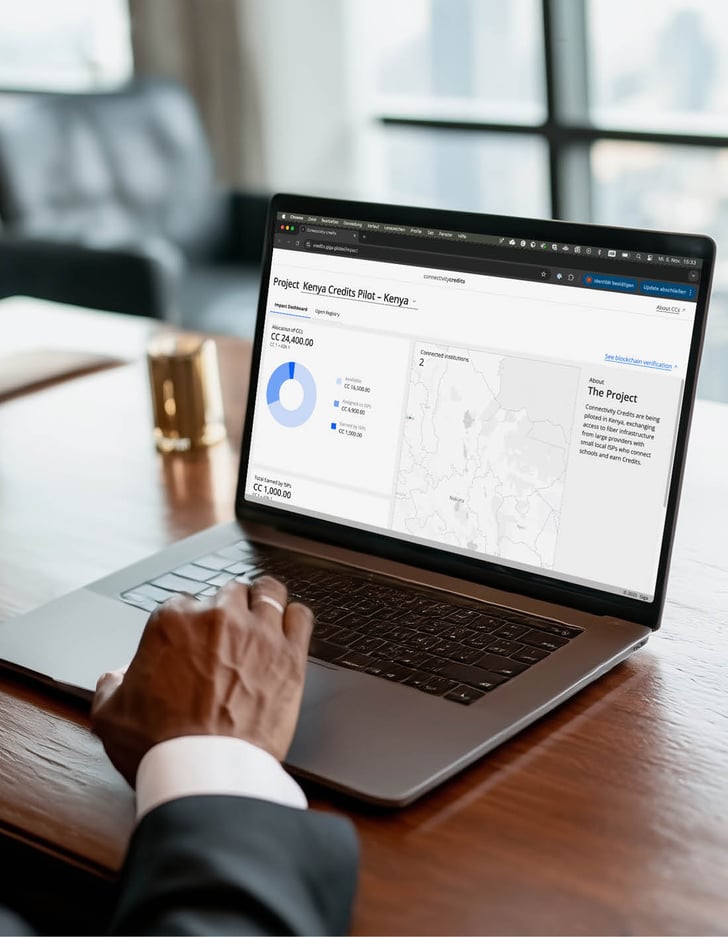
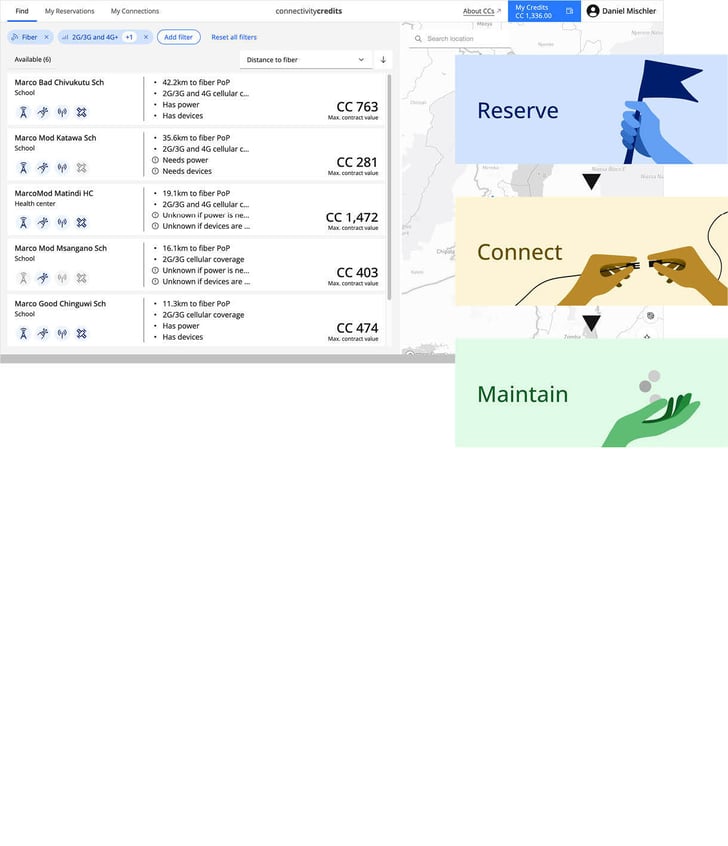
Together with UNICEF and PierWallet, Adnovum developed a system that quickly evolved from a vision to a functional MVP. The web platform and its integrated point system (Connectivity Credits) based on blockchain technology allow for transparent management and redemption of credits. ISPs receive immediate credits upon installing an internet connection and gain further rewards over time for maintaining the coverage. They benefit from simple, unbureaucratic, and transparent processes, as well as reliable compensation for their services.

unicef_image_3

In addition, a dedicated application operated by UNICEF was created for incentive providers such as government initiatives and network infrastructure providers. Here, institutions can be registered, tenders created, and incentives managed. This allows UNICEF to validate the concept in practice and collect data for further development.

A publicly accessible dashboard shows the project's progress: which institutions are connected, where they are located worldwide, how many ISPs are involved, and what revenue has been generated. Interested parties can track progress and potentially get involved themselves.

Features that give real added value

Practical testing: UNICEF can trial the Connectivity Credit concept under real conditions and quickly see how the system performs.

Direct feedback: Using the platform, they receive valuable feedback from ISPs and institutions to further develop the system based on real-world data.

Attracting new investors and partners: The public dashboard offers a transparent overview of progress and program results, which UNICEF can use for presentations and discussions.

Scalability: The MVP allows for the gradual inclusion of additional countries and institutions once the processes are validated.

Focus on social impact: UNICEF can specifically support disadvantaged or remote regions and sustainably improve access to digital resources.

unicef_image_4

How we tackled the challenge

UNICEF approached us with a concept for a web platform including Connectivity Credits, which we adopted as the foundational framework. At the same time, we closed existing gaps and made the value of the credits tangible for users. Early user tests of the ISP application wireframes helped identify and resolve initial inconsistencies.

Despite the complex process of connecting schools, hospitals, and other institutions to the internet, we designed the platform to be so simple that users can take on a task with just a few clicks. The user experience was intended to feel like a casual app from the App Store.

Through close collaboration, we created an MVP that not only reflects UNICEF’s vision for the platform but is also practical and user-friendly.

This is our client

UNICEF is the United Nations Children’s Fund, working globally to protect the rights, health, and education of children. The organization operates in over 190 countries and territories, supporting primarily disadvantaged and vulnerable children and communities. UNICEF promotes access to education, medical care, clean water, and protection from violence and crises. The organization relies on innovative approaches, partnerships, and digital solutions to effectively achieve its mission.